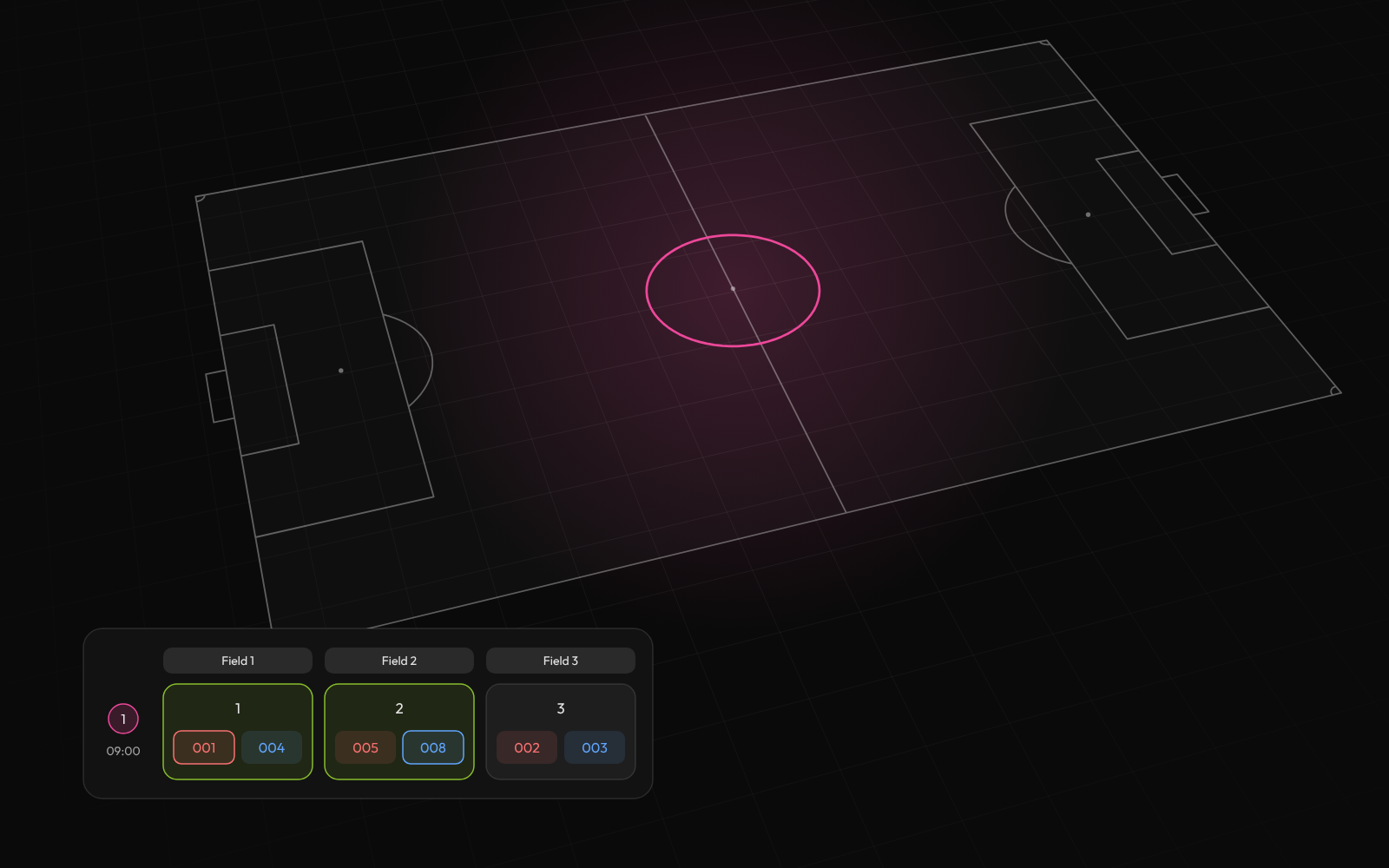
Build the whole schedule
Add your teams, groups and courts. Tournamyx fills in every round across them, a round at a time.
Football eats pitch hours faster than any other format, and the schedule is the thing that decides whether you finish before dark. Tournamyx builds it, keeps the table live, and publishes one link the clubs actually check.
Free for up to 8 players · $12 per event beyond that · Nothing to install
For football organizers running 7-a-side and 11-a-side competitions
We built Tournamyx for football organizers in exactly this situation.
Field guide · football organizers
Football is the format where the arithmetic bites hardest. A 7-a-side match with two twenty-minute halves and a changeover occupies a pitch for about fifty minutes. An 11-a-side match with two forty-five minute halves occupies it for closer to one hundred and five. Very few one-day competitions can absorb the second number at any meaningful field size.
Sixteen teams in four groups of four is twenty-four group matches before a single knockout game. At 7-a-side on two pitches that is twelve slots, or about ten hours, which is not a day. On four pitches it is six slots, around five hours, and the quarter-finals through final add three more sequential slots for another two and a half. That is a long but genuinely achievable Saturday.
At 11-a-side the same twenty-four group matches on four pitches is over ten hours before the knockout starts. The honest options are fewer teams, more pitches, or more days. Work it out with the tournament schedule maker before you publish a format you cannot finish.
16 teams, four groups of four, 24 group matches
| Format | Slot length | 2 pitches | 4 pitches |
|---|---|---|---|
| 5-a-side (2 × 15) | ~35 min | ~7h 00m | ~3h 30m |
| 7-a-side (2 × 20) | ~50 min | ~10h 00m | ~5h 00m |
| 9-a-side (2 × 30) | ~70 min | ~14h 00m | ~7h 00m |
| 11-a-side (2 × 45) | ~105 min | ~21h 00m | ~10h 30m |
Football tables are three points for a win, one for a draw, then goal difference, then goals scored. It is a simple hierarchy that becomes surprisingly laborious across four groups and twenty-four matches, because every result changes two rows and the version everyone is looking at is a photo of a whiteboard taken forty minutes ago.
Draws are what make football different from most tournament sports here. They are common, which means groups finish level far more often than in volleyball or basketball, and goal difference does more of the work of deciding who goes through. Getting it wrong by one goal in one row changes who plays in the quarter-final.
Tournamyx recomputes the full table, covering played, won, drawn, lost, goals for and against, difference and points, on every saved result, and publishes it on the same link the clubs already have. If you are running the group-into-knockout shape, the group stage + knockout generator will build it and place the qualifiers when group play ends.
Plenty of football competitions are not one-day events at all. A ten-team league playing everyone once is forty-five matches across nine rounds, or one evening slot a week for most of a term. Home and away doubles it to ninety matches over eighteen rounds, which is a full season and a genuinely different administrative problem.
The difficulty in a league is not generating the fixtures, it is that the table has to stay correct and visible for months while results arrive one or two at a time from different people. Spreadsheets survive a Saturday. They rarely survive a season, because the file gets copied, edited offline, and eventually two versions disagree about whether a match was played.
Keeping the fixtures and the table in one place that every club reads and only authorised people can edit removes the whole class of problem. Roles are assigned per competition, so a club secretary can submit their own result without being able to edit anyone else’s, and the round robin generator shows the fixture count for any league size before you start.
Questions
Pitch hours, not entries, decide the format. Tournamyx lays the fixtures out a round at a time across the pitch count you enter, so a round runs in parallel and the next follows. Enter your real slot length including changeover, because that is what turns a fixture list into a finish time.
Four groups of four is 24 group matches, since each group of four plays 6. The knockout for the eight qualifiers adds 7, so 31 in total. A full round robin across 16 teams would be 120 matches, which is a season rather than a Saturday.
Yes. Tournamyx recomputes the league table on every saved result, covering played, won, drawn, lost, goals for and against, goal difference and points, and publishes it on the same public link every club already has, so nobody maintains a whiteboard or a spreadsheet during the day.
Tournamyx generates a round robin and lays the rounds across as many match days as the season needs, with scores staying live between them and the public link unchanged. Tournamyx does not generate home-and-away league fixtures, so a double round robin has to be set up as two rounds of fixtures.
The comparison
Every match day brings the same questions. Answer them one message at a time, or send one link that answers them for you.
What it handles
Tournament management software earns its keep on match day, at the moments most events fall apart.
Add your teams, groups and courts. Tournamyx fills in every round across them, a round at a time.
Round robin, knockout, Swiss, groups into knockout, timed attempts.
Points, tiebreakers, draws and who goes through. Every stage can be different.
Case study · IIUMRC, Jul 2025
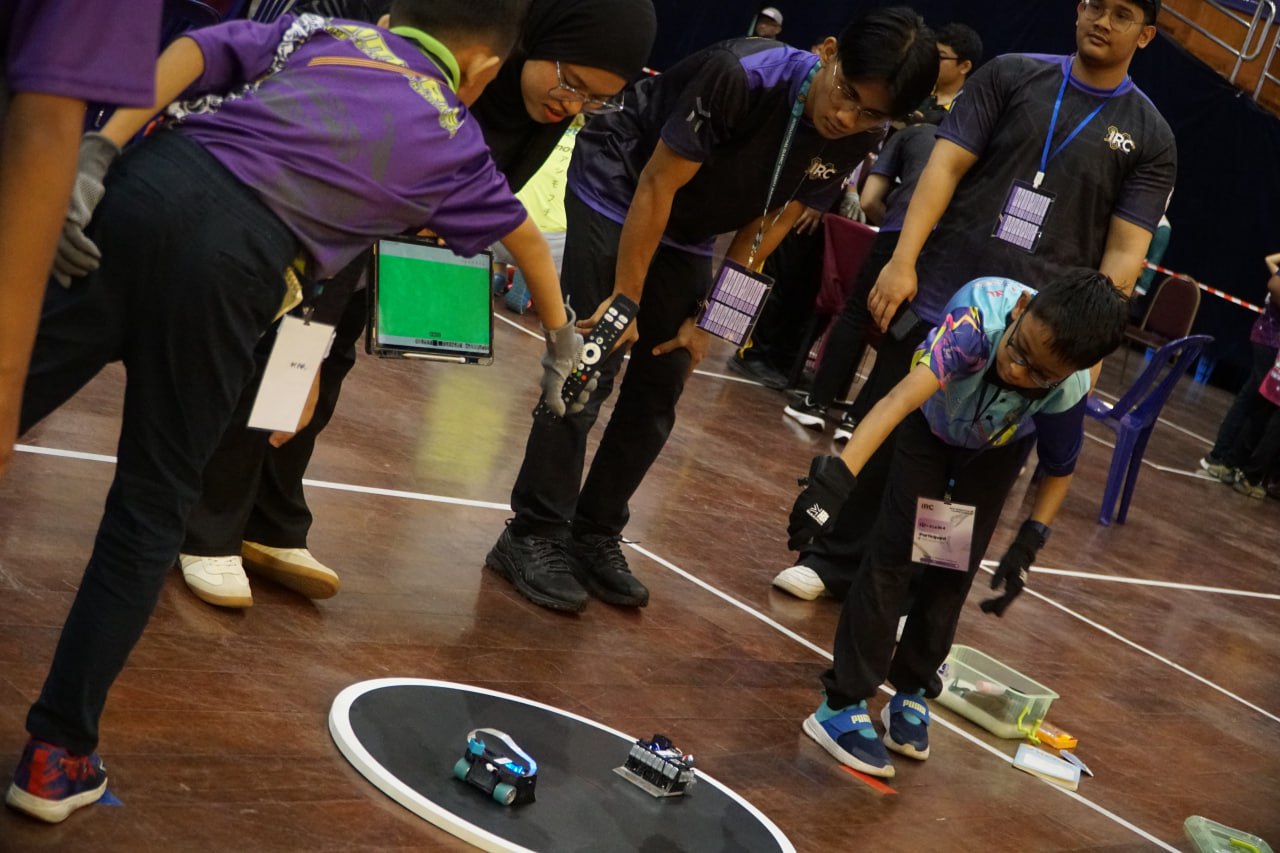
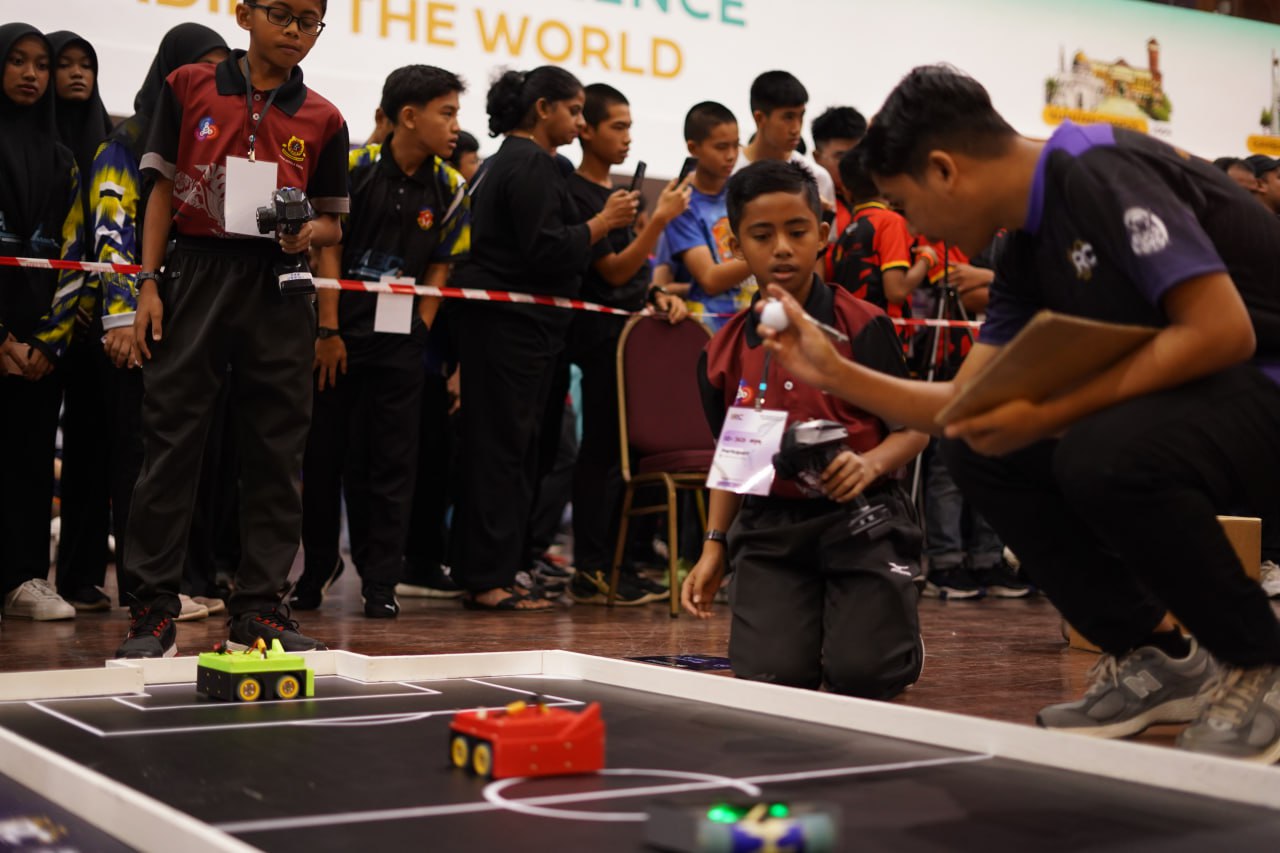
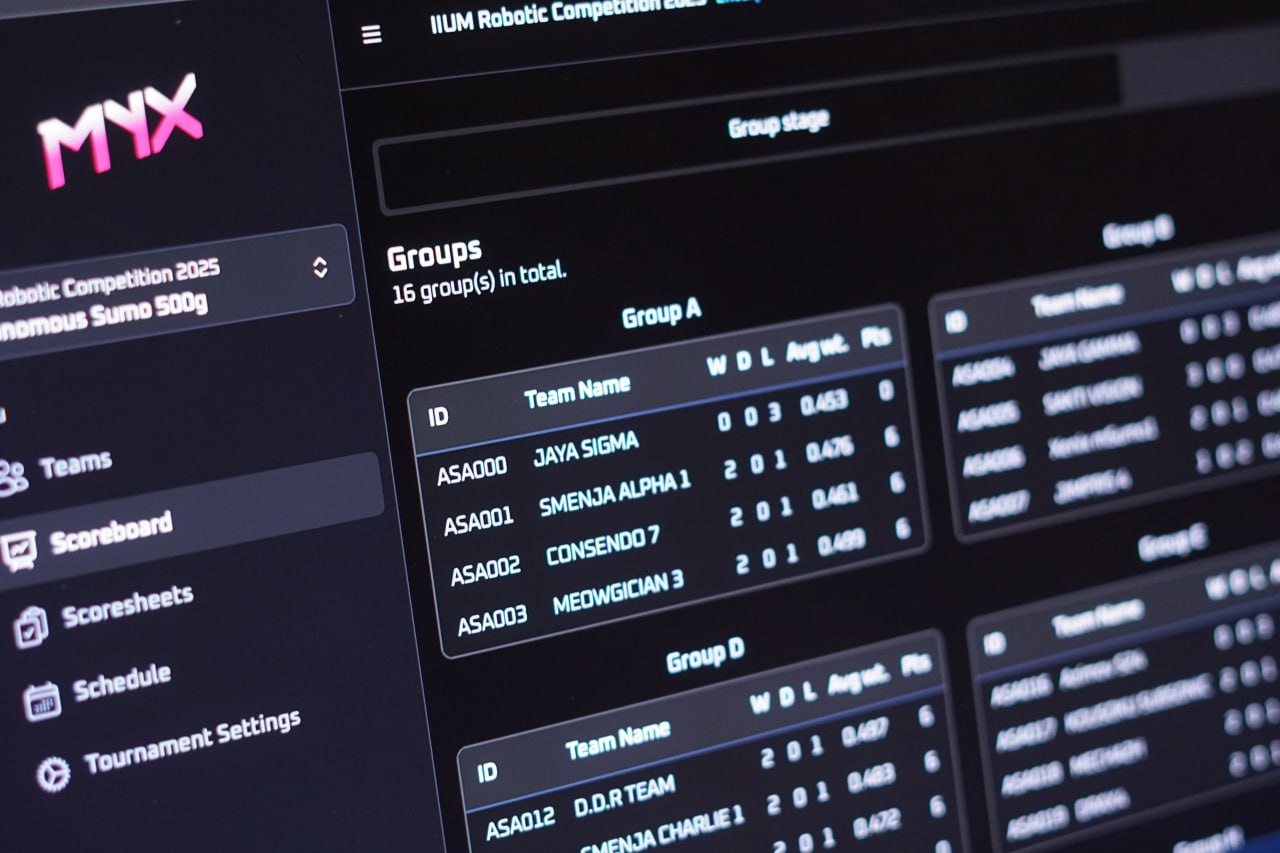
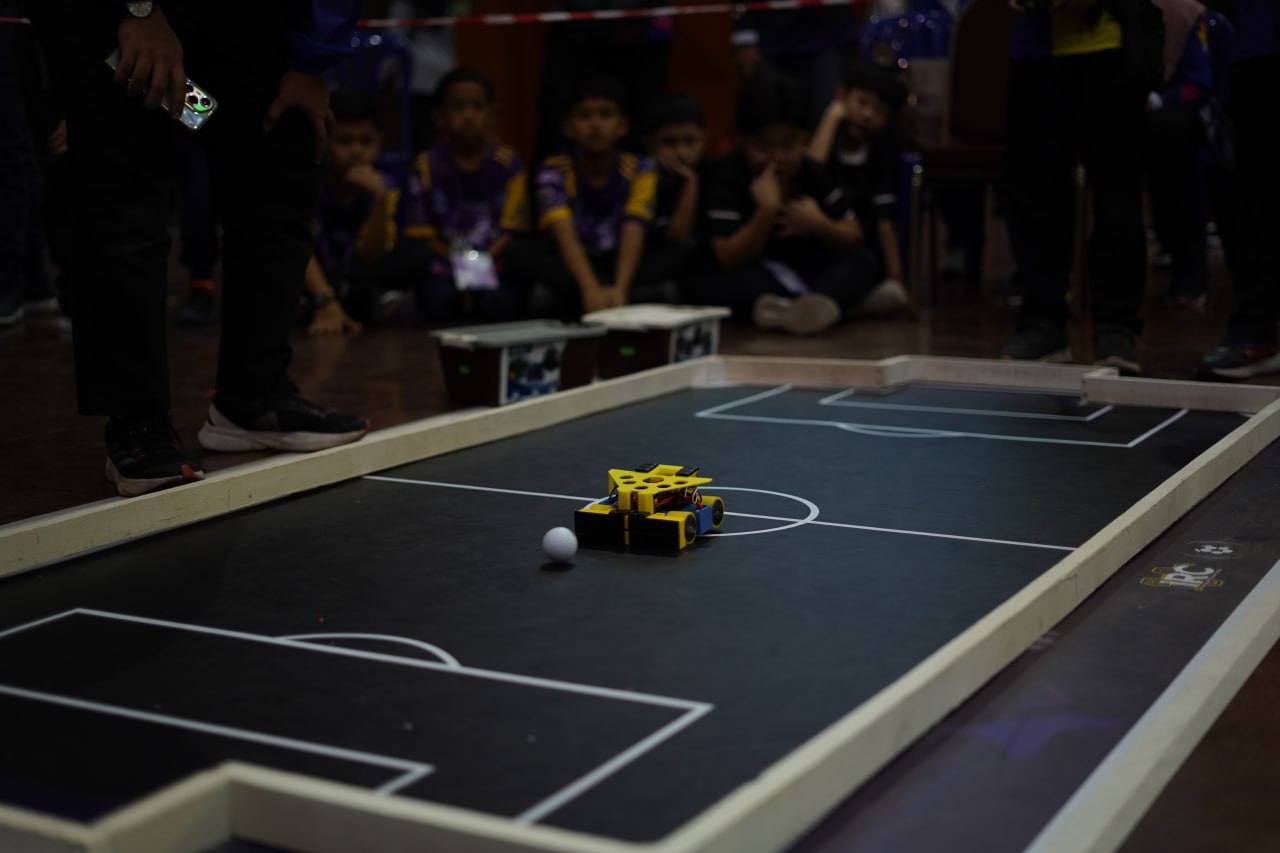
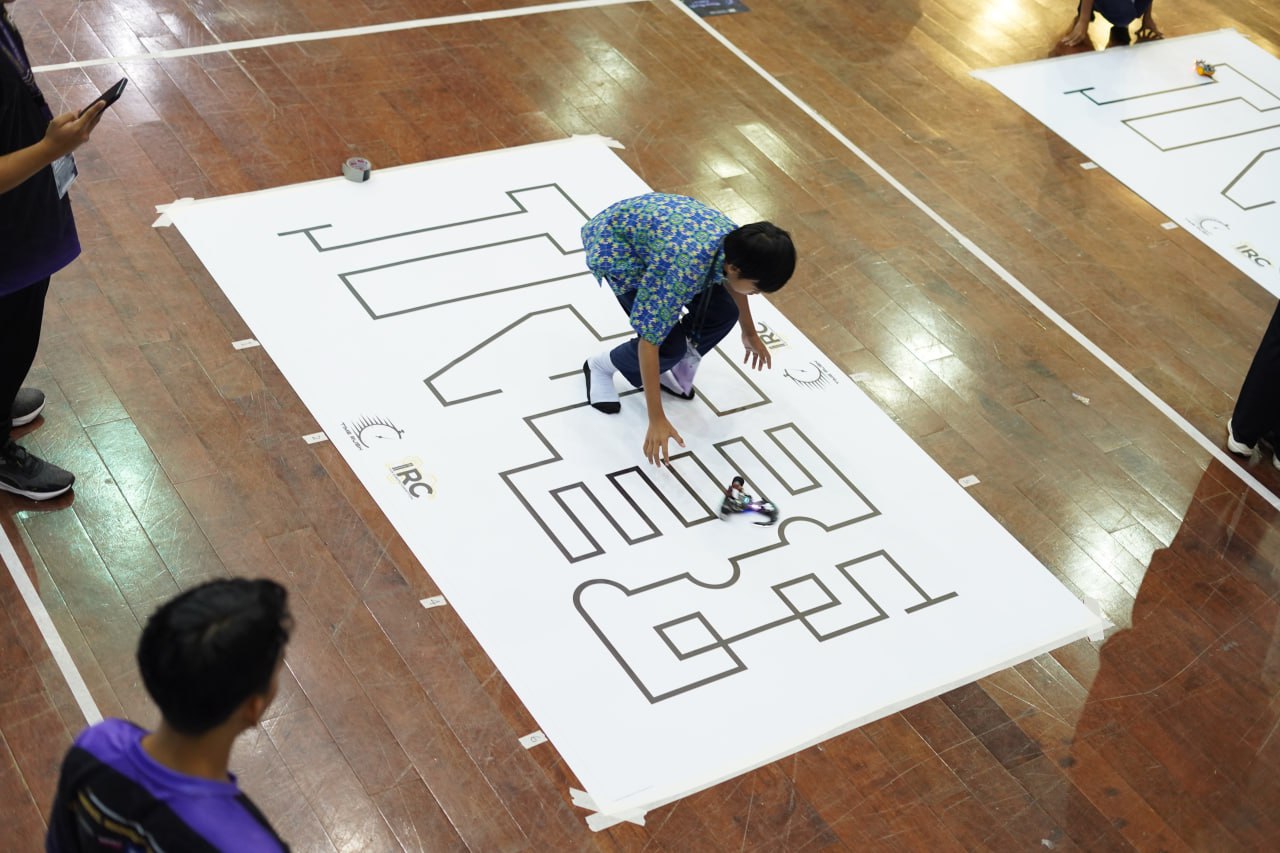
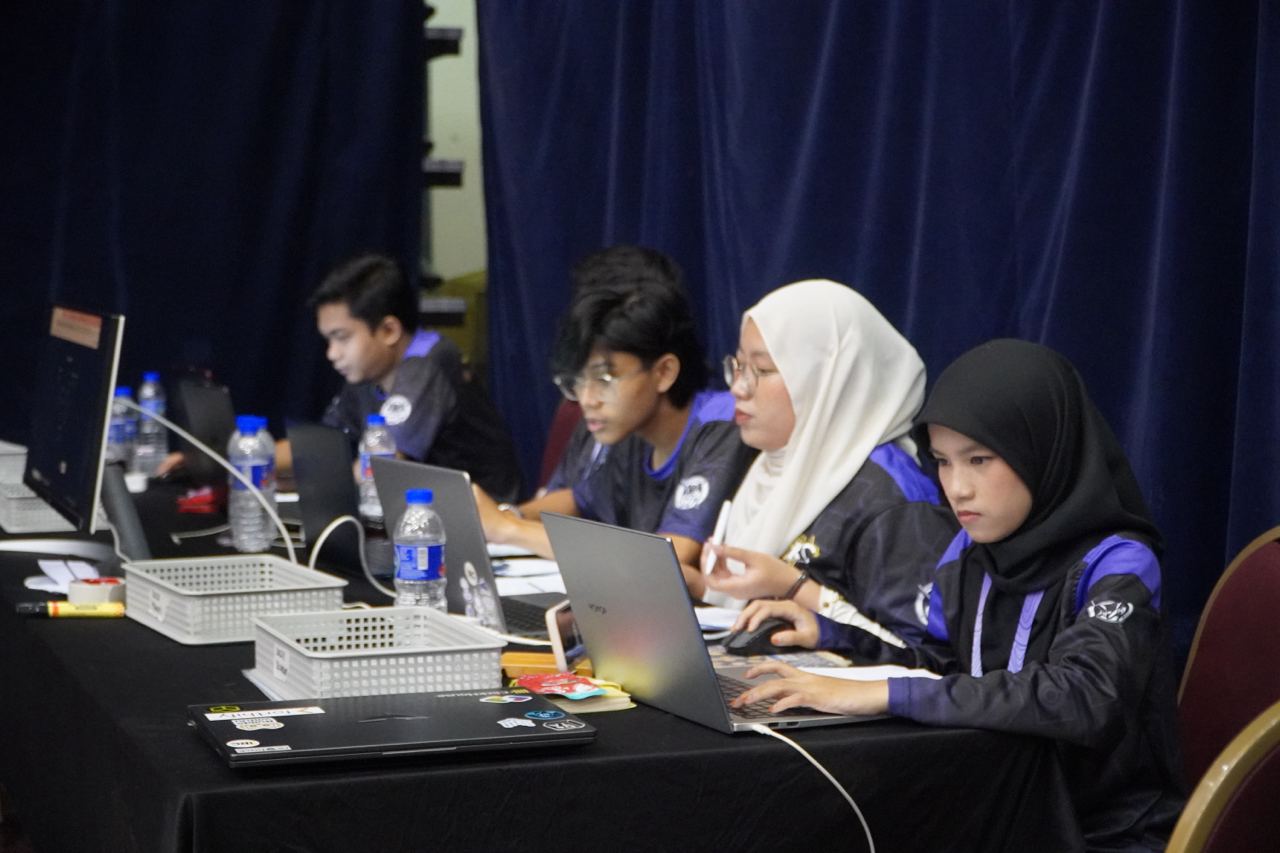
In July 2025, Tournamyx ran the IIUM Robotic Competition, the annual international robotics tournament at IIUM Gombak, where school teams from Malaysia and abroad compete in sumo, robot soccer, and time-rush events. That came to 406 teams across three categories and 755 matches, all scheduled and scored live, with every standing on one public link. If it holds up there, it will hold up at your Sunday futsal night.
Read how we did it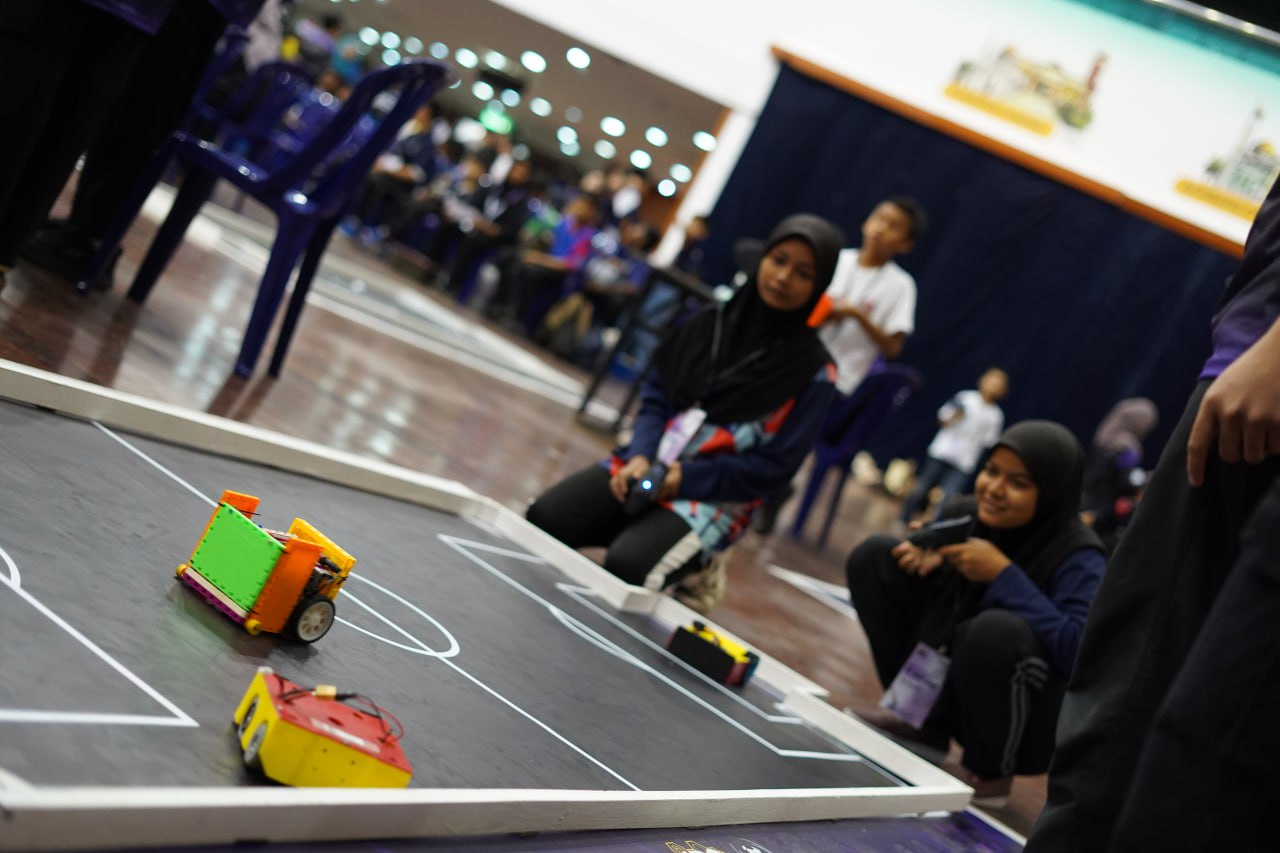
Kickoff
Enter the teams, let Tournamyx lay out the draw, and share one link that stays current for the rest of the day.
Free for up to 8 players · $12 per event beyond that · Nothing to install