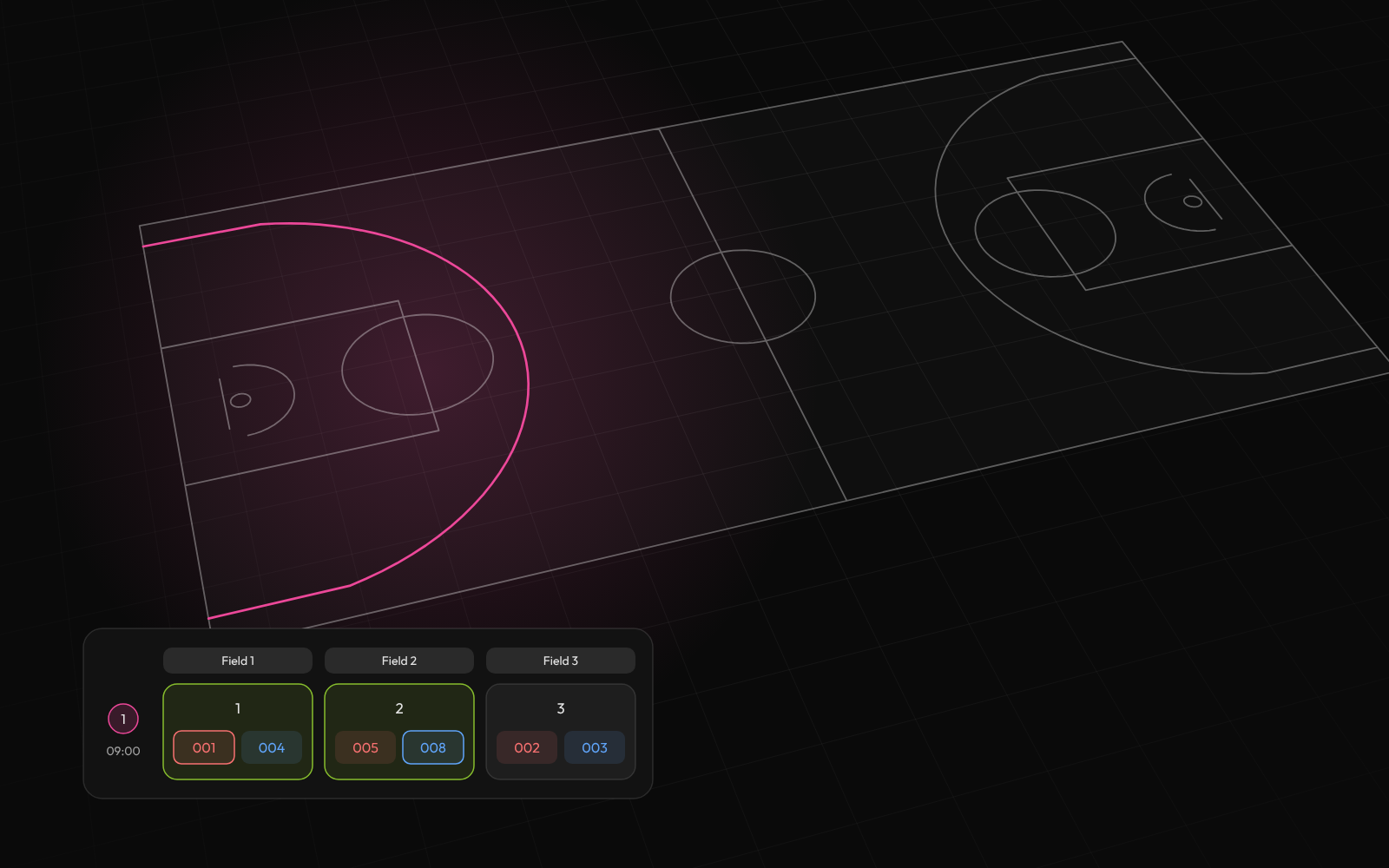
Build the whole schedule
Add your teams, groups and courts. Tournamyx fills in every round across them, a round at a time.
A 3x3 tournament and a 5v5 tournament with the same team count are completely different days. Tournamyx builds either schedule, keeps standings live, and gives every team one link to check.
Free for up to 8 players · $12 per event beyond that · Nothing to install
For basketball organizers running 3x3 or full-court tournaments
We built Tournamyx for basketball organizers in exactly this situation.
Field guide · basketball organizers
The single biggest scheduling mistake in basketball is planning a full-court event with 3x3 assumptions. A 3x3 game, at ten minutes running clock or first to 21, occupies a court for about fifteen minutes including changeover. A 5v5 game with four eight-minute quarters, breaks and a warm-up occupies it for about fifty. That is more than three times the court time for the same fixture list.
Twelve teams in three pools of four is eighteen pool games either way. At 3x3 on two courts that is nine slots, or about two and a quarter hours, and you can run the playoffs the same morning. At 5v5 on the same two courts it is seven and a half hours before the playoffs start, which is not a one-day event unless you have four courts.
So the format question is really a court question. If you have one gym with two courts and a single day, 3x3 lets you run twelve teams comfortably and 5v5 does not. The tournament schedule maker shows the slot count for your real court number before you announce anything.
12 teams, three pools of four, 18 pool games
| Format | Slot length | 2 courts | 4 courts |
|---|---|---|---|
| 3x3 (10 min running) | ~15 min | ~2h 15m | ~1h 15m |
| 3x3 (first to 21) | ~20 min | ~3h 00m | ~1h 40m |
| 5v5 (4 × 8 min) | ~50 min | ~7h 30m | ~3h 45m |
| 5v5 (4 × 10 min) | ~60 min | ~9h 00m | ~4h 30m |
Basketball tournaments almost always want the same shape: pool play so every team gets guaranteed games, then a bracket so the day has an ending. The friction is in the handover between them, the moment where someone works out who qualified, in what order, and writes the quarter-final draw on a whiteboard while eight teams wait.
That handover is where the day slips. Point differential has to be computed for every pool, ties broken, seeds assigned across the bracket so pool winners do not meet in the first playoff game. Done by hand it takes twenty minutes and produces at least one argument.
Tournamyx chains the stages: when the last pool game is scored, the qualifiers are placed into the bracket automatically, in seeded order, and the public link updates for everyone at once. The teams know their quarter-final before you have finished packing up the scoretable.
Basketball pools are usually separated on point differential, which is the fairest quick tiebreak available and also the one most open to distortion. A team that wins by fifty against the weakest side in the pool can finish above a team that beat them head-to-head, and everyone can feel that something went wrong even if the rules were followed exactly.
The standard fix is a cap, with differential counted only up to fifteen or twenty points per game, published with the rest of the rules before entry closes. It removes the incentive to run up a score on an outmatched team, which is worth doing for its own sake at youth and corporate events.
Whatever you choose, publish it with the schedule and let the standings compute themselves from it. Tournamyx recalculates the table on every saved result, so the qualification picture is visible to every team throughout the day rather than assembled at the end.
Questions
Tournamyx lays the schedule out a round at a time across the court count you enter, so every court runs a game at once and the next round follows. 3x3 and full-court are different tournaments with different slot lengths, so enter the real slot length for each rather than averaging them.
Three pools of four is 18 pool games, because a pool of four plays 6. Adding quarter-finals onward for the top eight is another 7, so 25 games in total. Tournamyx generates the pools and fills the bracket automatically the moment the last pool game is scored.
Tournamyx recomputes the pool tables on every saved result and fills the knockout bracket once every pool match in a group is complete, so the seeding happens the moment the last pool game is in rather than while eight teams wait. The bracket appears on the same public link.
Yes. Tournamyx is free for basketball tournaments of up to 8 participants per tournament, with unlimited tournaments and no credit card. Plus is $19 per month for 64 and Pro is $49 for 256, and a one-off $12 unlocks a single event for 30 days.
The comparison
Every match day brings the same questions. Answer them one message at a time, or send one link that answers them for you.
What it handles
Tournament management software earns its keep on match day, at the moments most events fall apart.
Add your teams, groups and courts. Tournamyx fills in every round across them, a round at a time.
Round robin, knockout, Swiss, groups into knockout, timed attempts.
Points, tiebreakers, draws and who goes through. Every stage can be different.
Case study · IIUMRC, Jul 2025
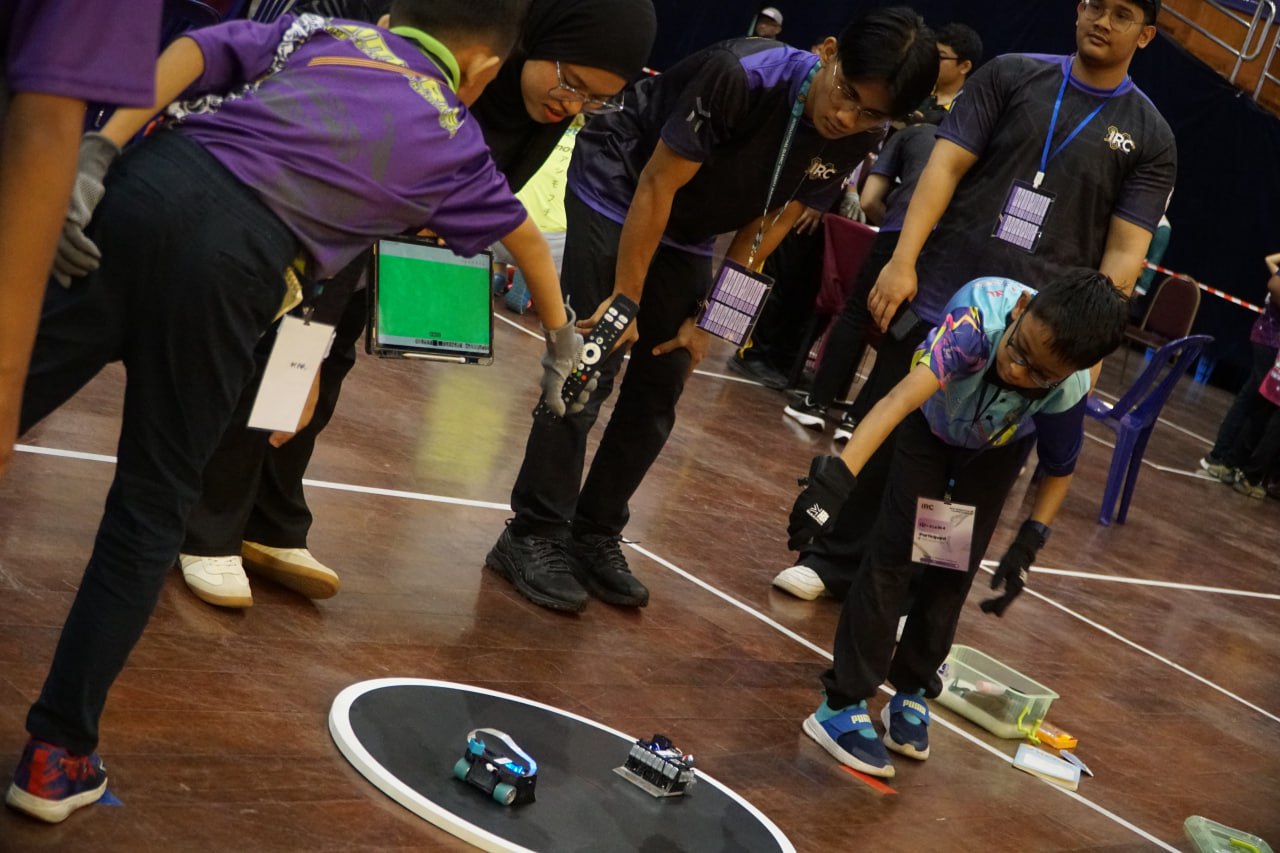
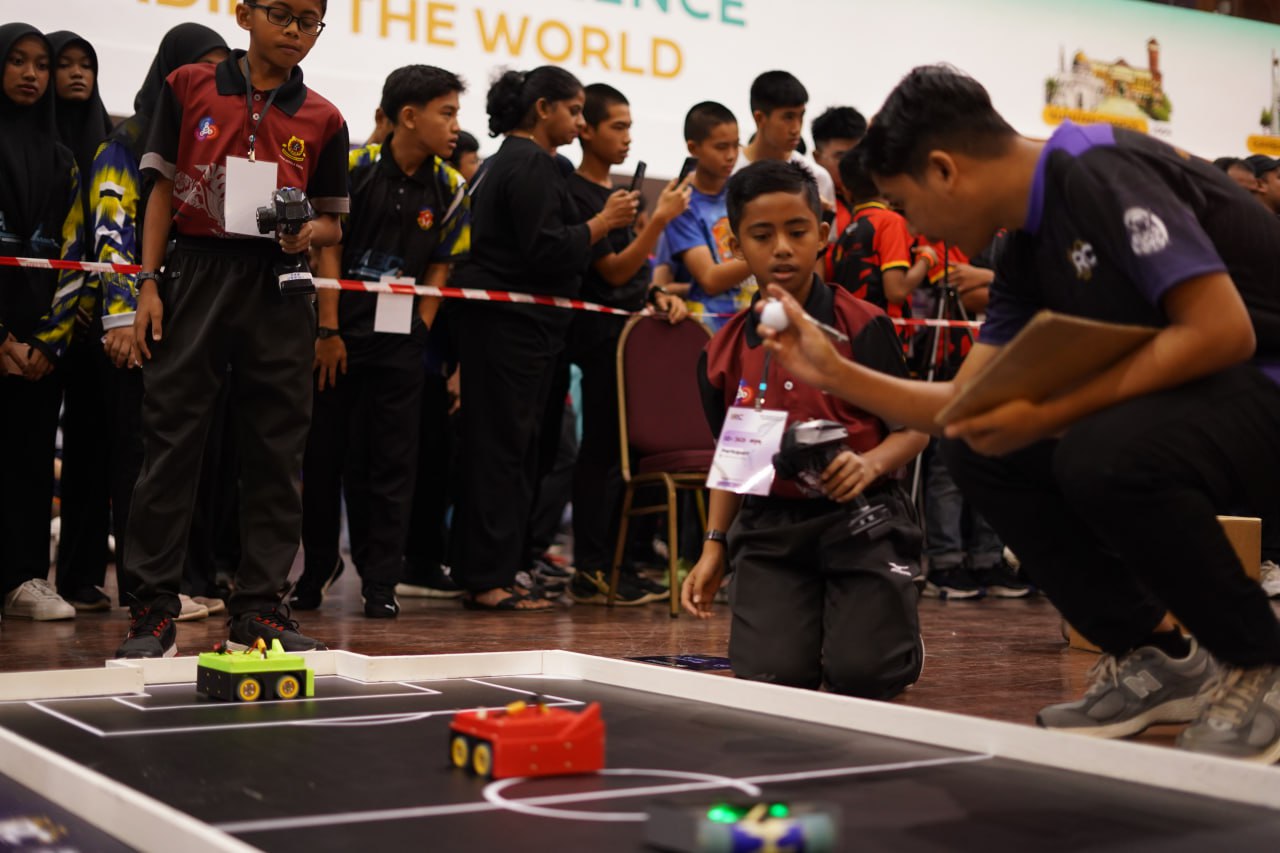
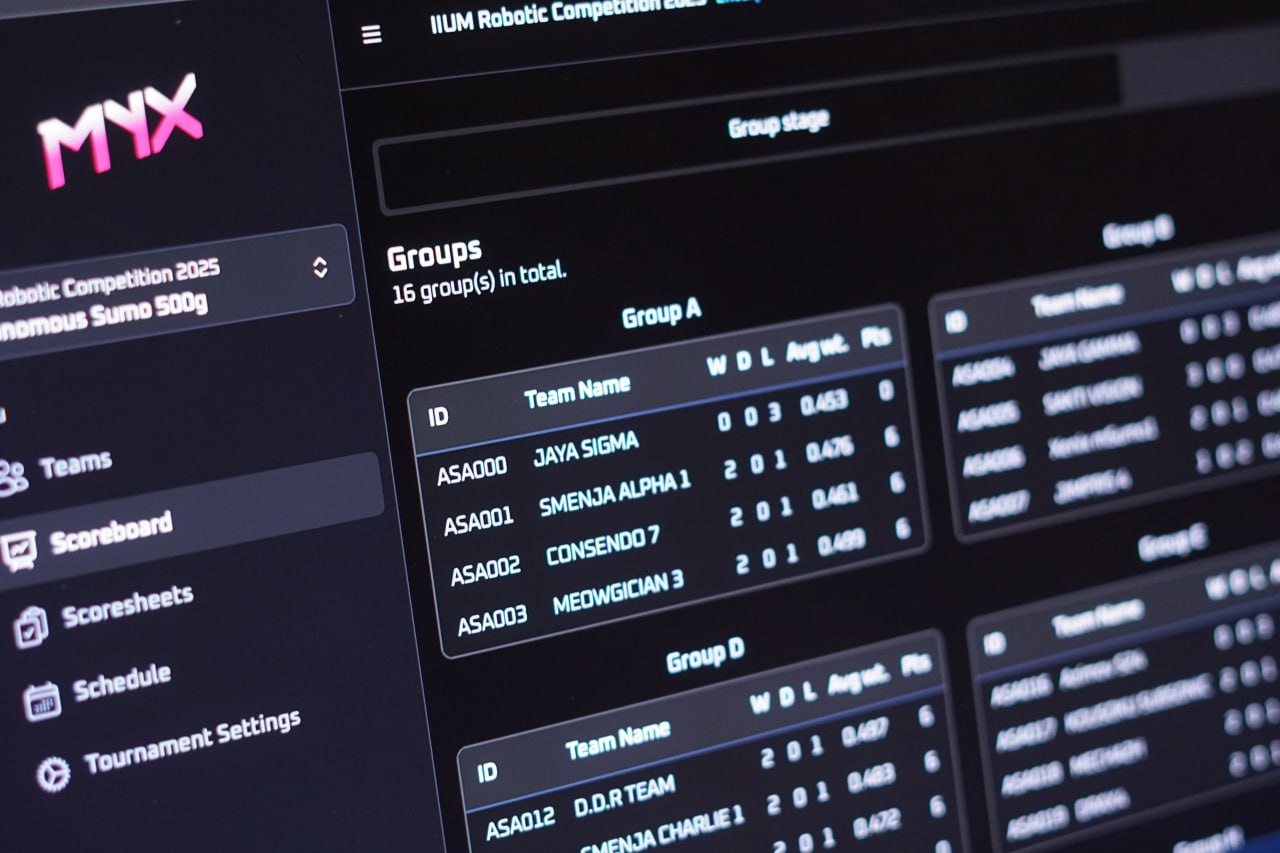
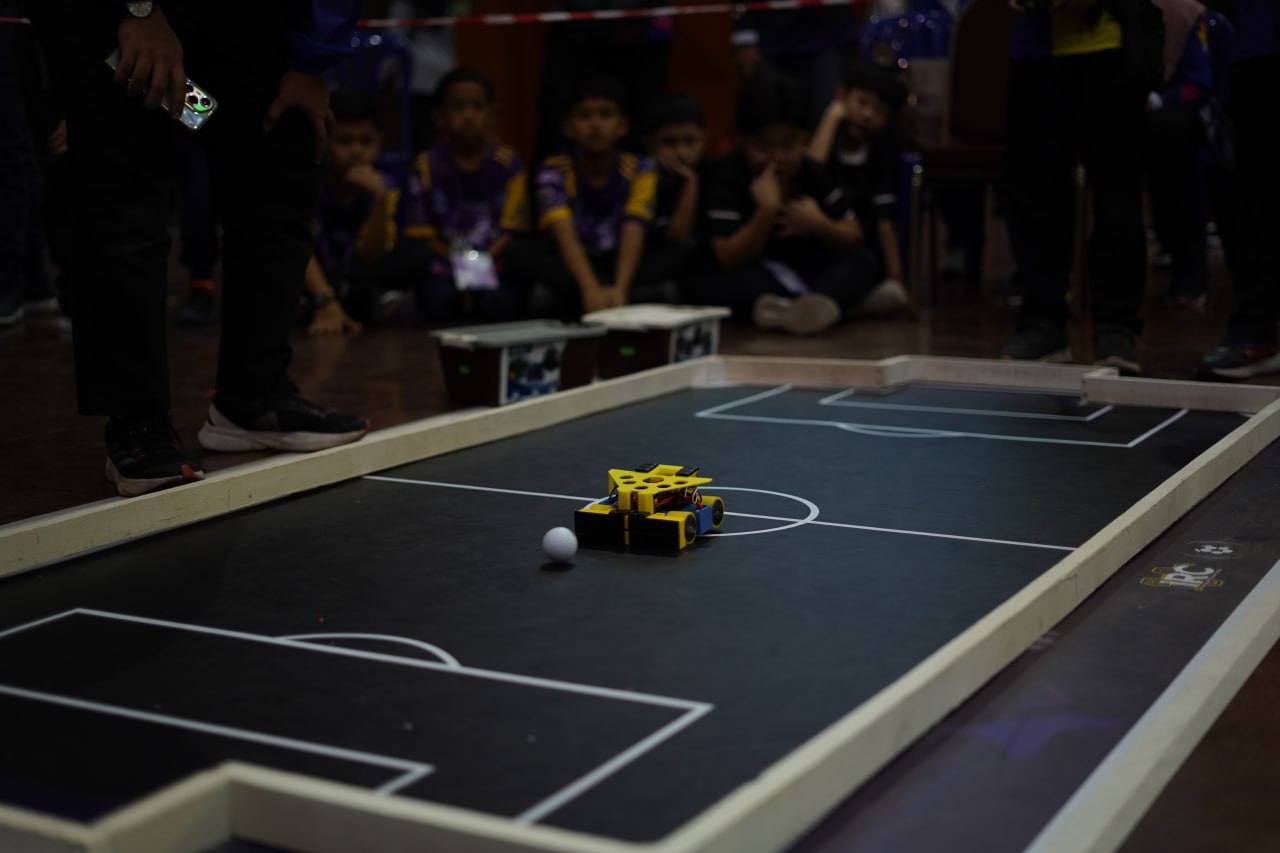
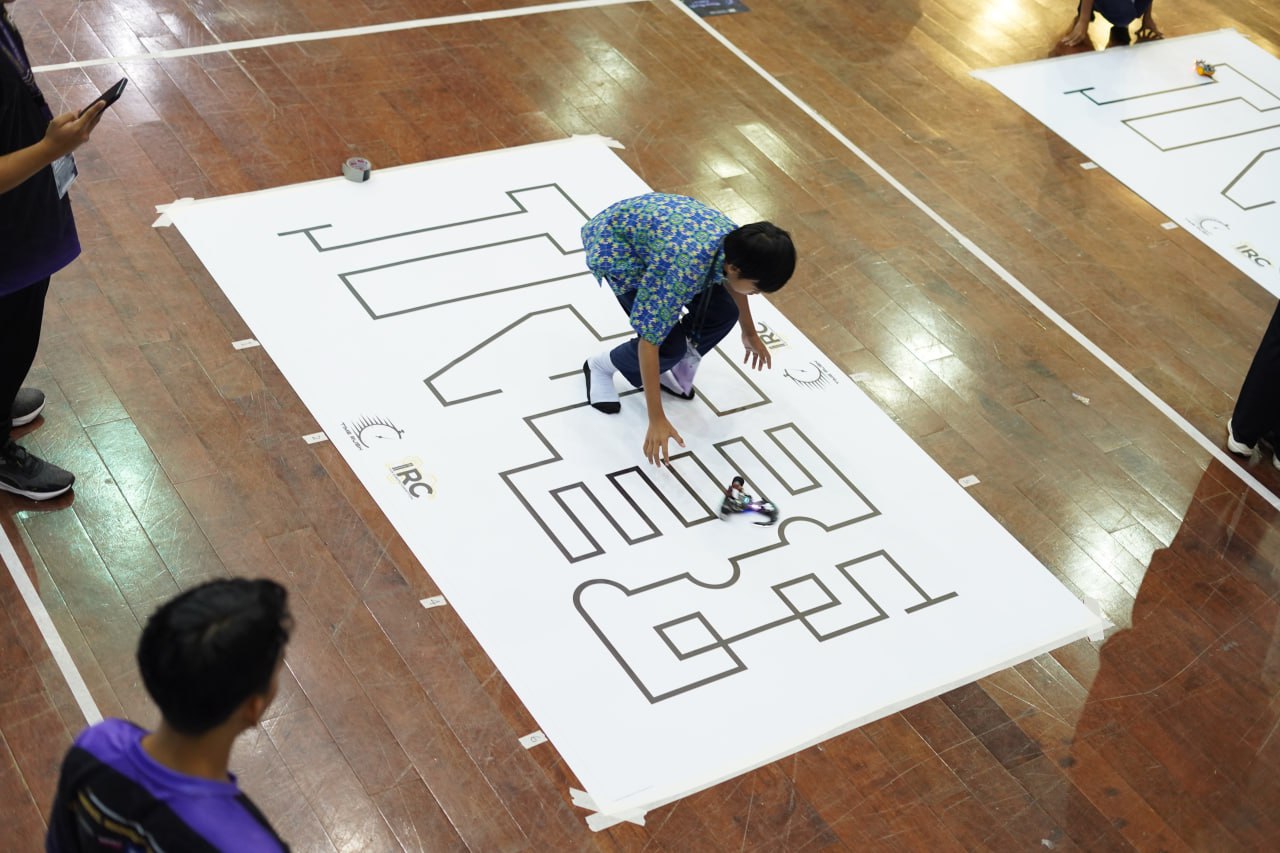
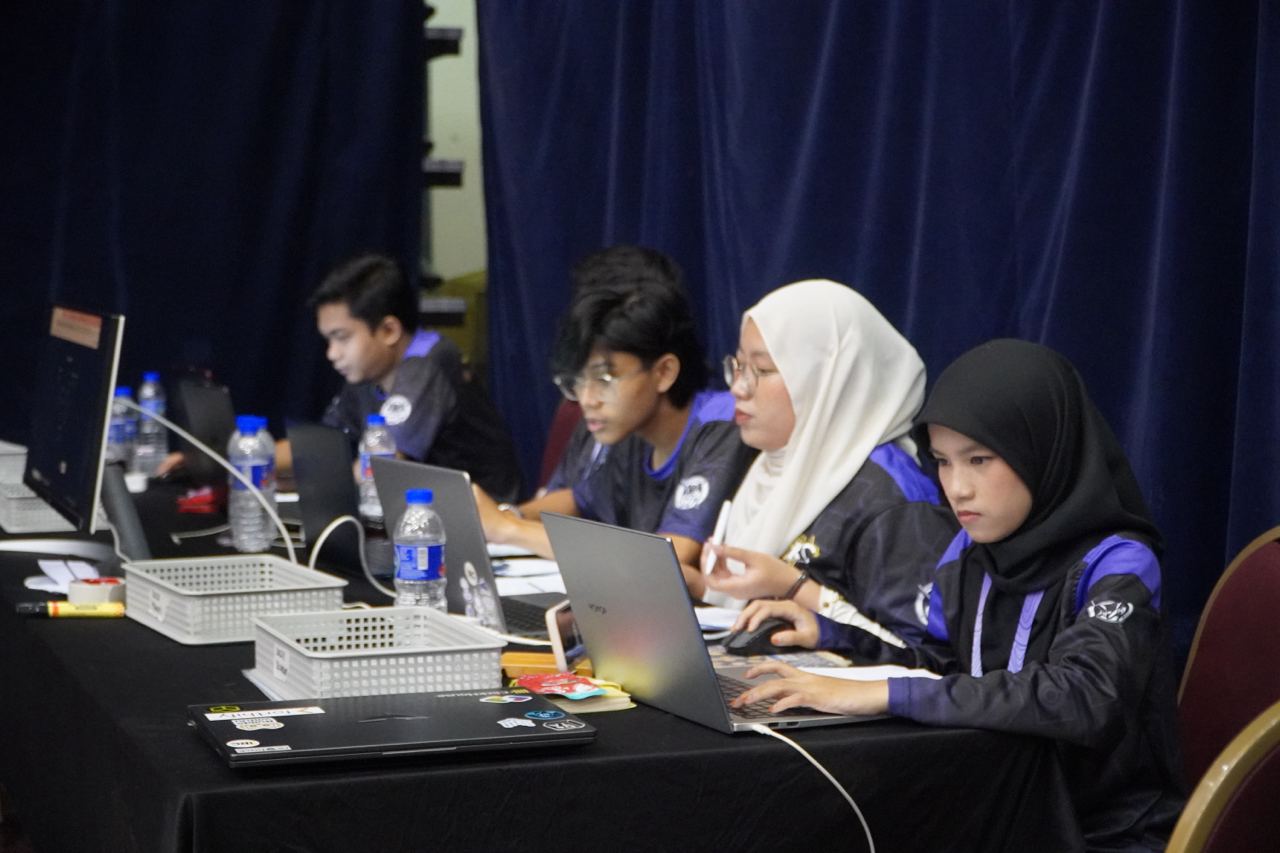
In July 2025, Tournamyx ran the IIUM Robotic Competition, the annual international robotics tournament at IIUM Gombak, where school teams from Malaysia and abroad compete in sumo, robot soccer, and time-rush events. That came to 406 teams across three categories and 755 matches, all scheduled and scored live, with every standing on one public link. If it holds up there, it will hold up at your Sunday futsal night.
Read how we did it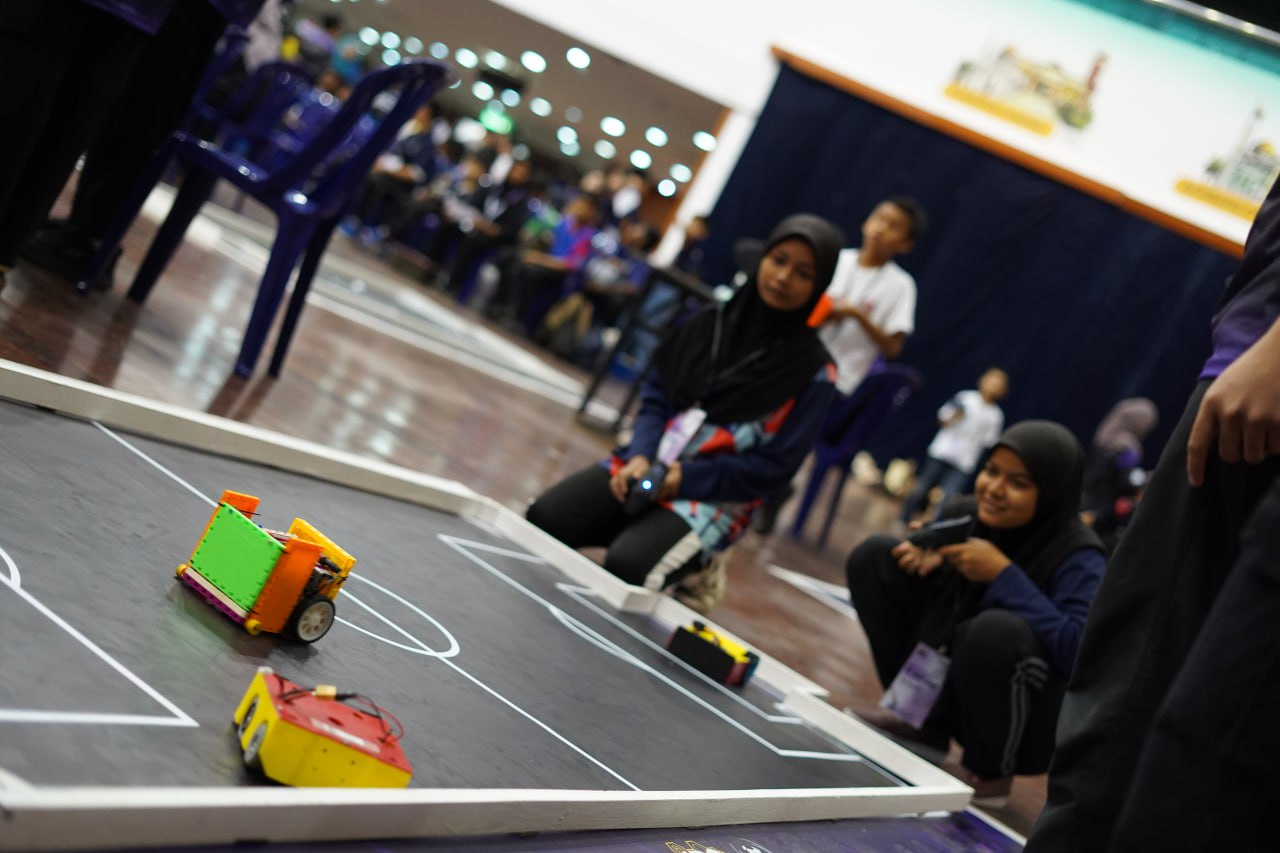
Kickoff
Enter the teams, let Tournamyx lay out the draw, and share one link that stays current for the rest of the day.
Free for up to 8 players · $12 per event beyond that · Nothing to install