Scheduling
From team list to full schedule in ten seconds.
Enter your teams, groups and courts. Tournamyx lays every round out across them, so no court sits empty.
For esports organizers running brackets that actually scale
Tournamyx handles the bracket, the live results, and the shareable spectator link, without the screenshot-of-a-screenshot bracket update nobody can read.
Free for up to 8 players · $9 per event beyond that · Nothing to install
If any of these sound familiar
We built Tournamyx for esports tournaments in exactly this situation.
Field guide · esports tournaments
Esports fields scale in a way physical sport rarely does, since an open qualifier can take 256 entries from a Discord post. Knockout depth grows logarithmically, which is why it handles those numbers at all: a 256-team single elimination bracket is 255 matches over 8 rounds, with no byes anywhere in the draw because 256 is a power of two. Doubling the field only ever adds one more round, so 512 entrants is 511 matches over 9.
The browser generators go up to a 64-team bracket, which is the largest draw that renders comfortably on a phone. Above that the draw is the same shape with more rounds in front of it: the round of 256 feeds a round of 128, then 64, and from there the bracket you can preview here is the back half of the qualifier.
The cost is that half your entrants play once. For a free open qualifier that is often acceptable. For a paid-entry event or a league stage it is not, and the format has to guarantee more games. Swiss pairs teams on equal records without eliminating anyone, so a 64-team, six-round Swiss is 192 matches with every team playing all six, which is the standard shape for large chess and card-game events, and increasingly for shooters.
Double elimination sits between the two: every team gets a second life, at roughly double the match count, and it runs live up to a 64-team bracket with the grand final reset included. If you are choosing between the two knockout styles, single vs double elimination covers the trade in detail, and the double elimination bracket generator has an interactive draw you can test your field size against.
64 teams, four formats
| Format | Matches | Rounds | Guaranteed games |
|---|---|---|---|
| Single elimination | 63 | 6 | 1 |
| Double elimination | 126 | 11 | 2 |
| 16 groups of 4 + knockout | 127 | 8 | 3 |
| Swiss, 6 rounds | 192 | 6 | 6 |
Most serious esports events are two tournaments wearing one name: open online rounds that cut a large field down, then a small offline final with a different schedule, a different venue and usually a different production crew. The handoff between them is where brackets get rebuilt by hand and seeding gets lost.
Running both stages as one multi-stage event keeps the qualifier results attached to the teams that carry into the final, so the LAN bracket seeds itself from what actually happened online rather than from someone retyping eight team names at 1am. Group qualifiers advance into the knockout automatically once a group is complete.
The default esports bracket update is a screenshot posted to Discord, which is out of date the moment the next series ends and unreadable on a phone by round three. Casters ask you for a fresh image mid-broadcast; viewers ask which match is next; you answer both while also running the tournament.
A live public link replaces all of it. Enter a result and the bracket advances everywhere at once: for players, for spectators, and for the caster who can now keep it open on a second monitor instead of messaging you. It costs nothing to hand out and needs no account to open. If you want to see the structure before committing an event to it, the tournament bracket generator builds and scores a live draw in the browser.
Questions
A 256-team single elimination bracket is 255 matches over 8 rounds, because every match eliminates exactly one team, so a field of n always needs n − 1 of them. There are no byes, because 256 is a power of two and the draw fills exactly. The round of 256 is 128 matches on its own, which is why open qualifiers at that size run online and in parallel rather than on a venue schedule.
A 64-team single-elimination bracket is 63 matches over 6 rounds. Double elimination is 126 matches and guarantees every team a second game. Tournamyx generates both, places byes automatically on the top seeds when the entry count is not a power of two, and advances winners the moment a result is saved.
Yes. Tournamyx runs double elimination at 4, 8, 16, 32 or 64 entrants, with a winners bracket, a losers bracket, automatic byes and a grand final set to either bracket reset or a single decider at generation time. Schedules can be filtered to winners, losers or grand final and exported as PDFs.
Tournamyx supports multi-stage events, so a group stage or Swiss qualifier can feed a knockout bracket with the standings carried across automatically. Double elimination is available as stage two rather than stage one, because it produces a champion rather than the seeding list a later stage needs.
Nothing. Every Tournamyx tournament has one public link that opens in any browser and shows the live bracket, schedule, scores and standings with no account, no login and no download. Only the organizer needs an account, so the URL can go straight into a stream overlay or a Discord pin.
The comparison
Every match day brings the same questions. Answer them one message at a time, or send one link that answers them for you.
What it handles
Tournament management software earns its keep on match day, at the moments most events fall apart.
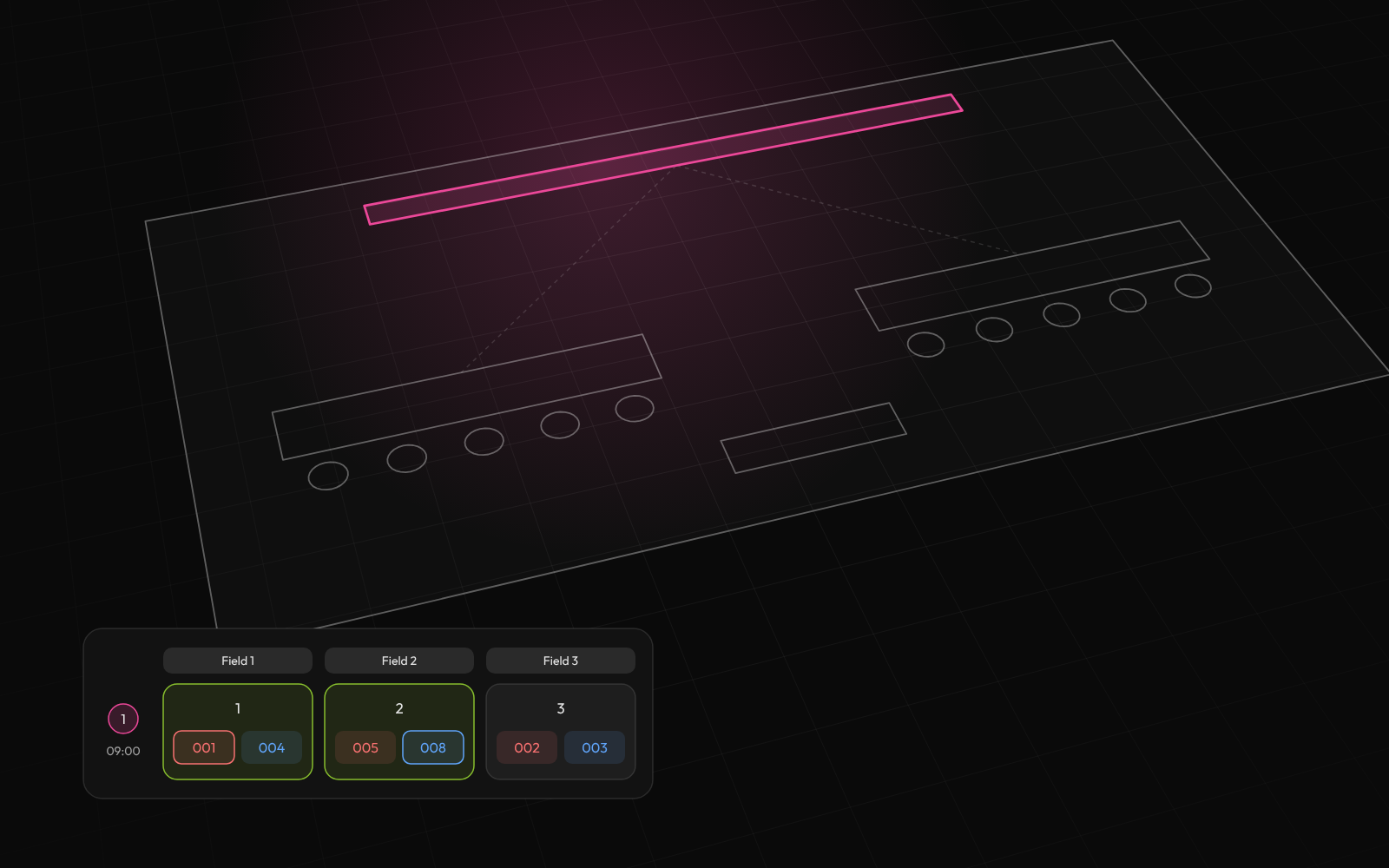
Scheduling
Enter your teams, groups and courts. Tournamyx lays every round out across them, so no court sits empty.
Formats
From round robins to timed attempts, and multi-stage events that chain a group stage into a knockout.
Changes
Drag them out, drop a replacement in. The bracket and the public link adjust on their own.
Scoring
Standings recalculate and the bracket advances on every save, before the teams have walked off the court.
Collaboration
Invite co-scorekeepers and divide the venue between you. Every score lands in the same live standings.
Case study · IIUMRC, Jul 2025
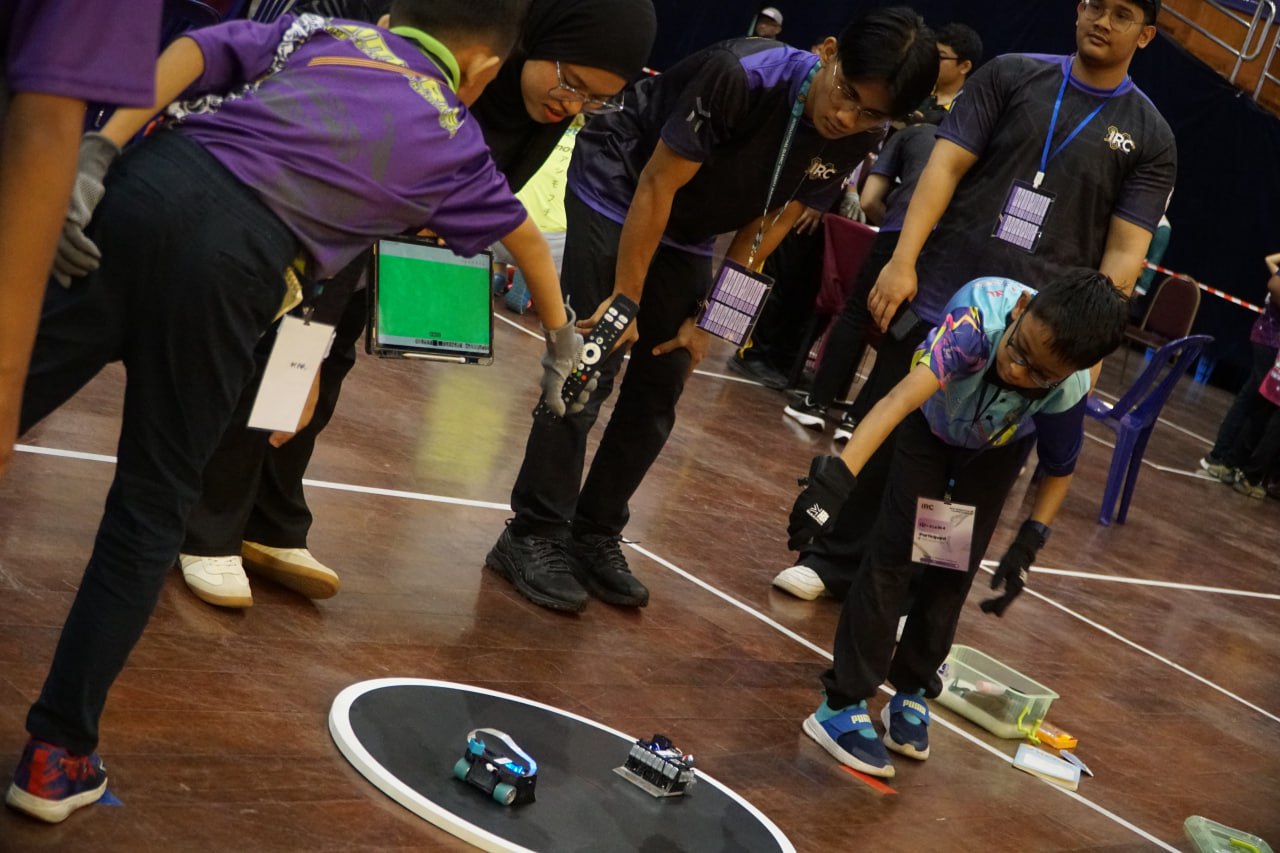
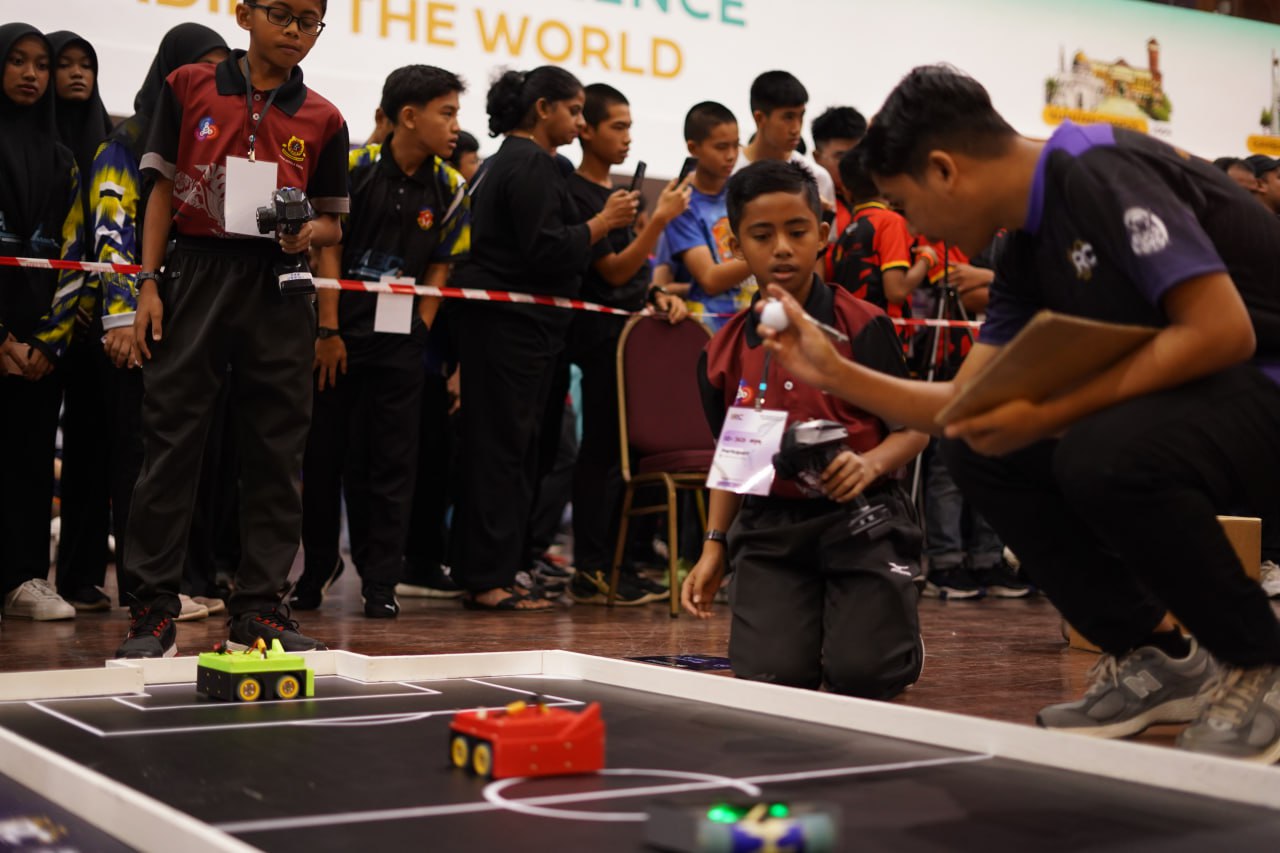
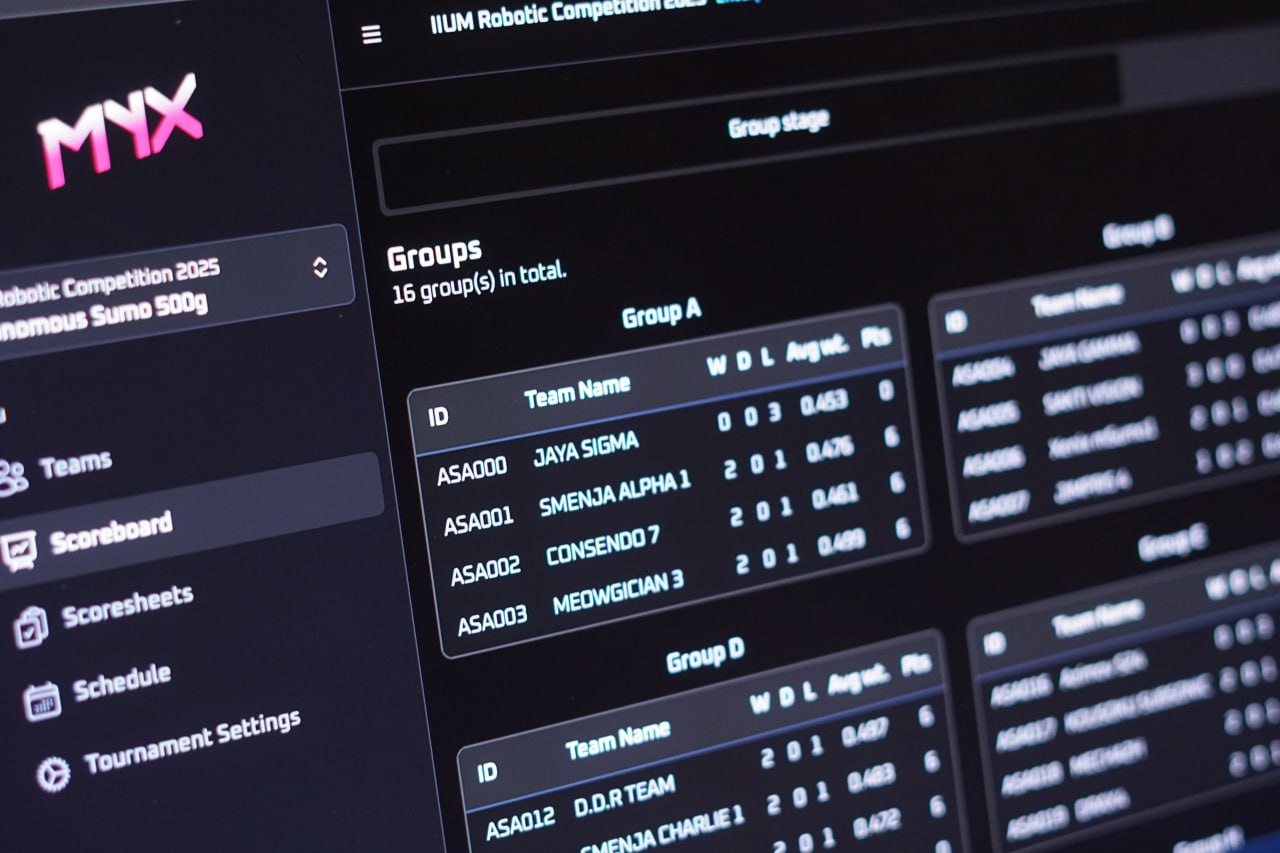
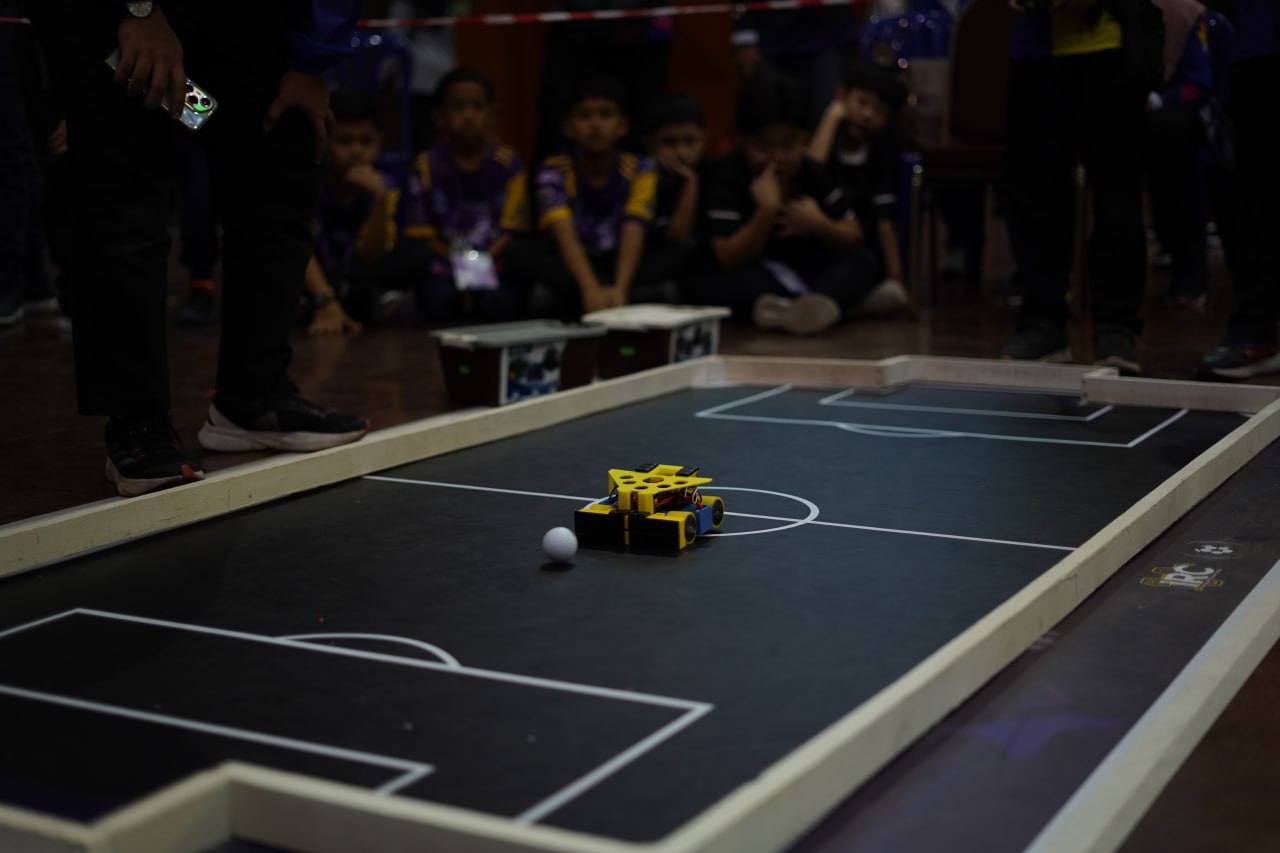
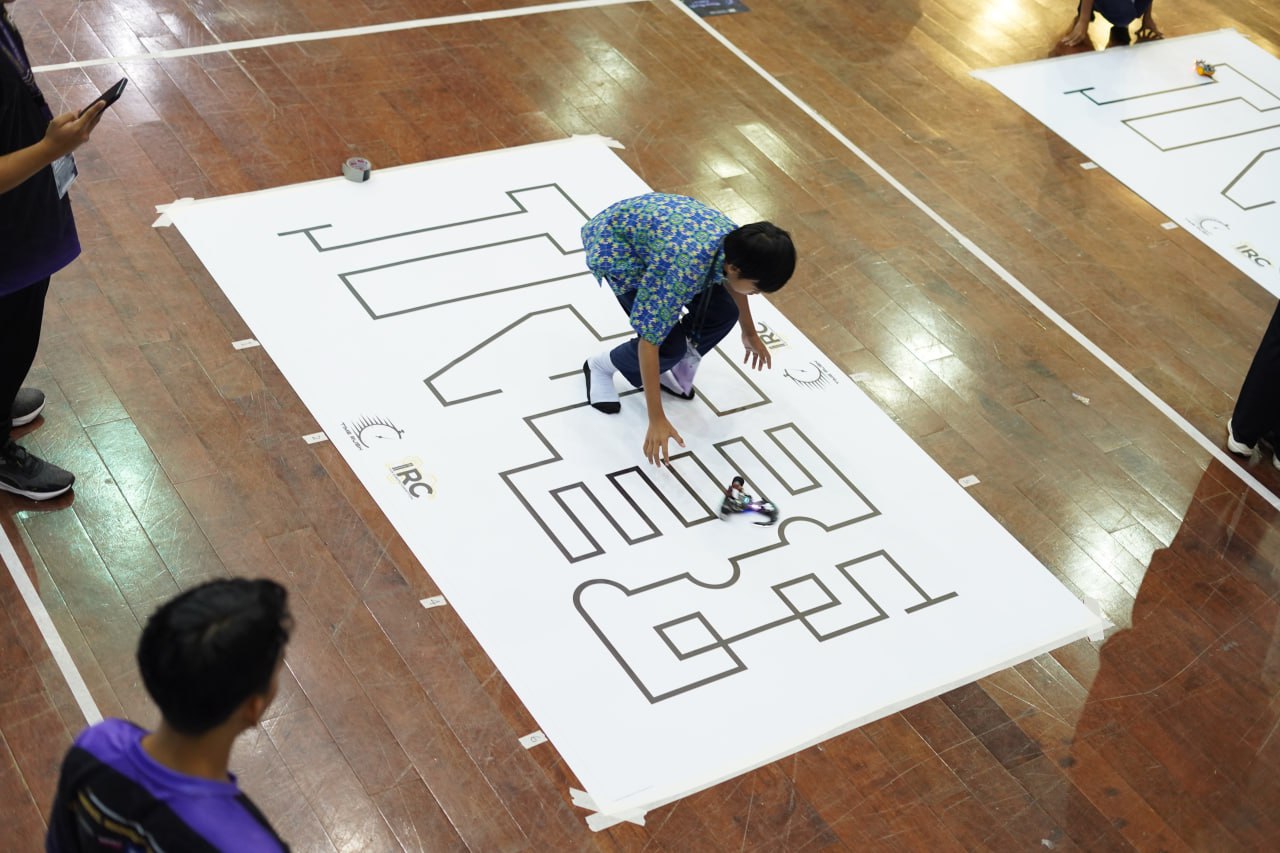
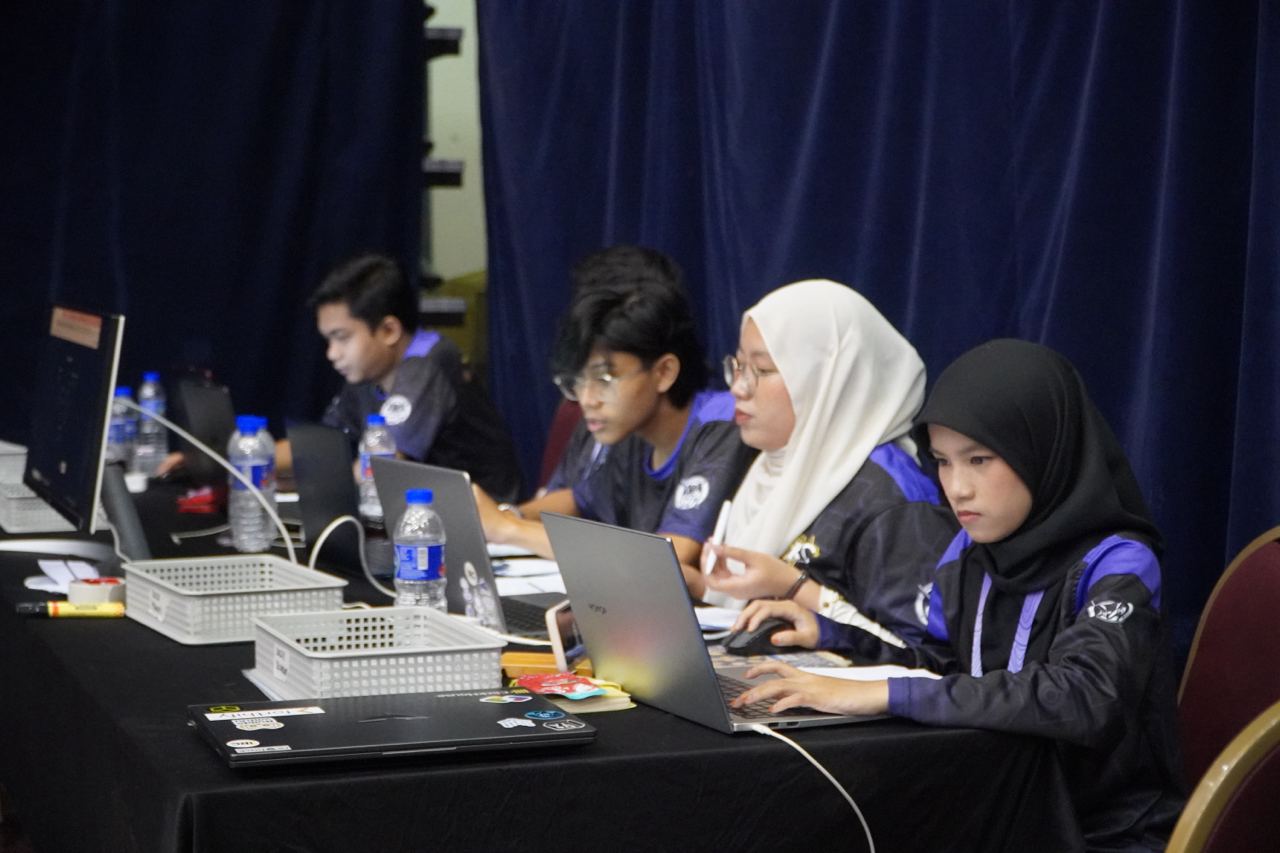
In July 2025, Tournamyx ran the IIUM Robotic Competition, the annual international robotics tournament at IIUM Gombak, where school teams from Malaysia and abroad compete in sumo, robot soccer, and time-rush events. That came to 406 teams across three categories and 755 matches, all scheduled and scored live, with every standing on one public link. If it holds up there, it will hold up at your Sunday futsal night.
Read how we did it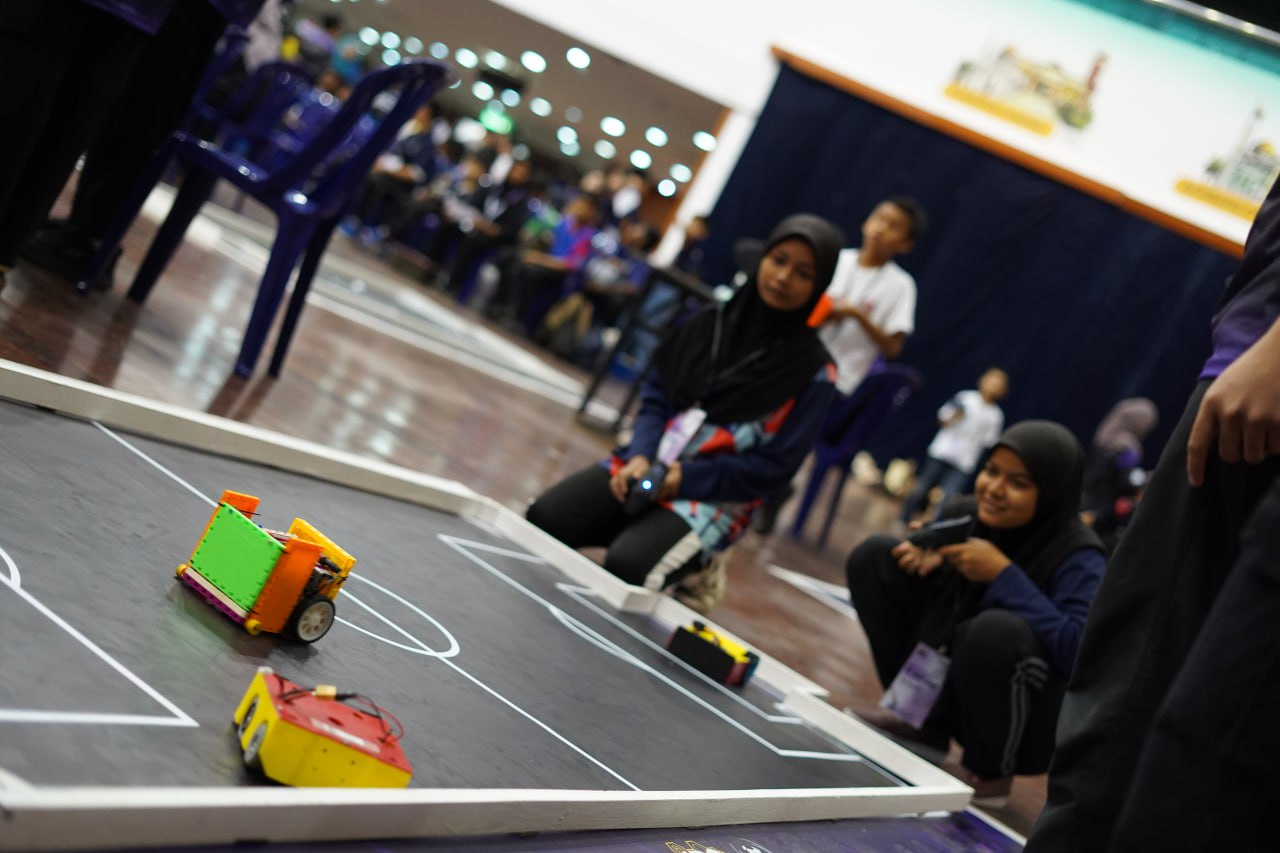
Kickoff
Enter the teams, let Tournamyx lay out the draw, and share one link that stays current for the rest of the day.
Free for up to 8 players · $9 per event beyond that · Nothing to install